
Mathura Vrindavan Travel Mistakes , Most things that go wrong on a Mathura Vrindavan visit are entirely preventable. A wrong outfit turned away at the temple gate. A phone confiscated at the Krishna Janmabhoomi security counter. An afternoon wasted waiting at closed temple doors. A tout charging ₹500 for “special darshan” that doesn’t exist.
None of these are Mathura or Vrindavan‘s fault. They are preparation gaps — things nobody told you before you arrived.
This guide covers the most common and most costly mistakes first-time visitors make, so you can avoid all of them before you leave home.
Mathura Vrindavan Travel Mistakes
Mistake 1: Carrying Your Phone Into Krishna Janmabhoomi
This is the single most common mistake made at Mathura — and one of the most disruptive to a day’s plans.
Krishna Janmabhoomi has strict no-phone and no-camera rules enforced at the security gate. All electronic devices — phones, smartwatches, cameras, even Bluetooth earbuds — must be deposited at the cloak room before entry. The deposit process takes 15–20 minutes and adds confusion to an already busy morning if you’re not expecting it.
What catches most visitors off guard: the cloak room is located some distance from the temple gate. If you arrive with your group and discover this at the gate, someone has to walk back to the cloak room while everyone else waits. Plan for this deliberately — leave all electronics in your cab or hotel room before arriving at Krishna Janmabhoomi. It simplifies entry enormously.
Banke Bihari Temple in Vrindavan also restricts photography inside the sanctum — specifically during the curtain ritual. This rule is actively enforced.
Mistake 2: Wearing the Wrong Clothes
Dress code is the most consistently enforced rule across Mathura and Vrindavan temples — and it is enforced at the gate, not suggested inside.
Women must cover shoulders and knees at Banke Bihari, Dwarkadhish, and most Vrindavan temples. A salwar kameez, saree, or long kurta with dupatta is ideal. Shorts, sleeveless tops, and tight Western clothing result in being turned away. Carry a dupatta or stole even if your main outfit is modest — you will need it for head covering at Dwarkadhish and Barsana’s Radha Rani Temple.
Men must wear full-length trousers or a kurta-pyjama. Shorts are not permitted at most major temples. The Janmabhoomi complex is particularly strict.
The simplest rule: dress as you would for a formal religious occasion at home. Traditional Indian clothing creates the least friction and adds to the devotional experience.
Mistake 3: Arriving After 11:30 AM and Finding Temples Closed
Most major temples in Mathura and Vrindavan follow a split-session schedule:
- Morning session: Opens around 5:30–6:00 AM, closes at 12:00 PM
- Afternoon session: Opens 4:00–4:30 PM, closes 8:30–9:30 PM
Visitors who arrive in Mathura by 11:00 AM expecting a comfortable full day of darshan frequently find the temples closing as they reach the gates. The noon closure is not a tourist-facing inconvenience — it is a ritual closure that has been observed for generations and will not bend for your schedule.
The solution is simple: start by 6:00 AM. The morning session gives you 5 to 6 hours across both cities before the midday closure. Alternatively, plan specifically for the 4:30 PM evening session with Prem Mandir as your anchor stop, knowing you’ll finish with the light show.
Mistake 4: Being Overcharged by Touts at the Ghat and Temple Gates
Mathura and Vrindavan have active tout ecosystems near all major tourist entry points. The most common scam: a man approaches you outside Krishna Janmabhoomi or Banke Bihari offering “VIP darshan,” “priest blessing,” or “fast entry” for ₹300–₅00 per person. None of these services exist in their described form. The standard darshan at both temples is completely free.
How to handle it: walk directly to the temple gate without engaging. If you need a guide, book one in advance through TripCosmos — all guides are vetted and there are no on-arrival pricing surprises.
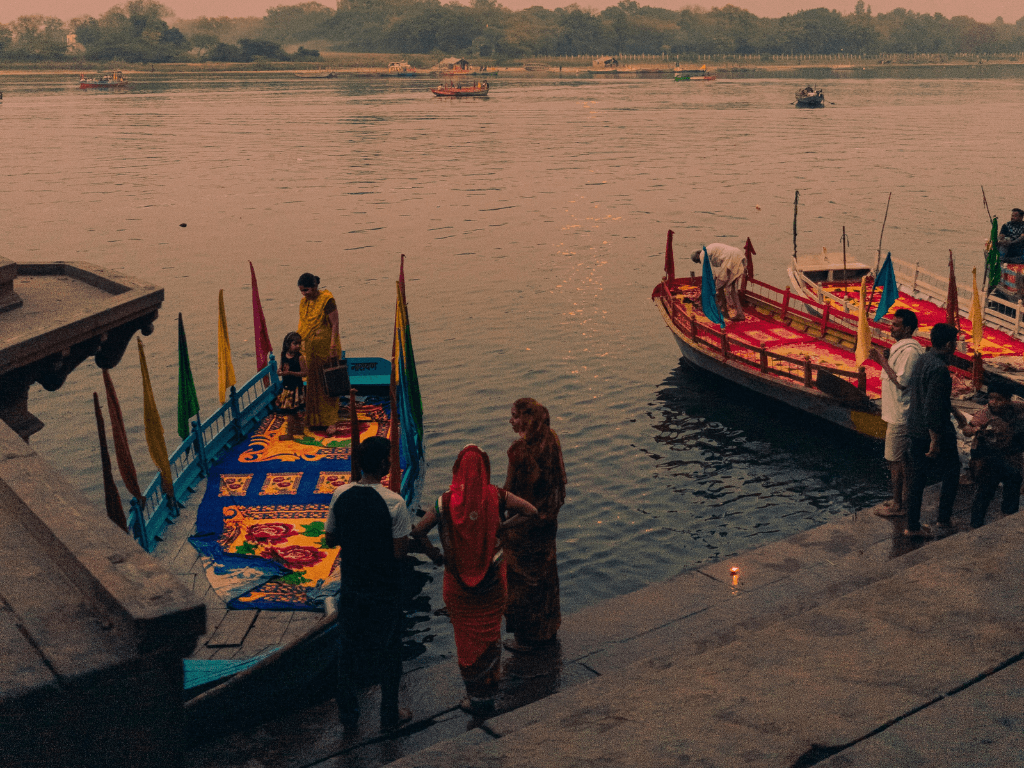
Similarly at the Yamuna ghats: boatmen who approach you before you reach the authorised ghat area will quote inflated rates. Walk to the official ghat boarding area (Vishram Ghat in Mathura, Keshi Ghat in Vrindavan) and book there. Standard private boat rates: ₹400–₇00 for 30–45 minutes.
Mistake 5: Not Accounting for Monkeys
Vrindavan’s temple lanes are home to a very large and very confident monkey population. This is not a minor consideration — it is a genuine hazard if you’re unprepared.
Monkeys in Vrindavan regularly take spectacles from faces, snatch food from hands, and have been known to grab bags. Do not carry open food near Nidhivan or the lanes between Banke Bihari and Radha Raman. Keep spectacles in a case inside a bag rather than on your face when monkeys are present. Do not make eye contact with monkeys or make gestures they interpret as threat or food-offering.
Your guide will navigate monkey-heavy areas with experience. If you’re self-navigating, move calmly and continuously — stationary visitors with visible food or shiny objects attract the most attention.
Mistake 6: Rushing Through Too Many Temples
Mathura and Vrindavan together have over 5,000 temples. An itinerary that tries to visit 10 of them in a single day results in remembering none of them properly.
The most meaningful Mathura Vrindavan day covers 6 to 8 carefully selected stops at a pace that allows each one to register. The prison cell at Krishna Janmabhoomi needs 15 minutes of quiet absorption to make its full impact. The curtained darshan at Banke Bihari needs patience. Nidhivan needs 20 minutes of sitting still.
The visitors who say Mathura Vrindavan changed them are almost never the ones who covered the most ground. They are the ones who slowed down at the places that mattered.
Mistake 7: Staying Too Far From the Temples
Accommodation 5 km from Banke Bihari or Keshi Ghat turns every early morning start into a logistical challenge. The 5:30 AM Yamuna sunrise boat, the 6:00 AM Vishram Ghat aarti, the first Banke Bihari darshan at 7:45 AM — all of these require proximity.
Stay on or near Ram Ghat Road in Vrindavan, within 1 km of the temple cluster. In Mathura, stay near Vishram Ghat. The cost difference between well-located and poorly-located accommodation is ₹200–₃00 per room per night — not worth the trade-off.
Mistake 8: Ignoring Food Safety
Mathura’s street food is extraordinary and almost entirely safe when eaten hot and freshly prepared. The famous Mathura peda should be purchased from shops with a visible preparation counter or a GI-certification certificate displayed — not from street hawkers.
The specific food safety rule: eat only freshly cooked hot food. Cold food left out, pre-prepared items at room temperature, and cut fruit from mobile carts are the most common sources of stomach problems on a Mathura Vrindavan visit. ISKCON’s Govinda’s restaurant is the single most reliable food option in Vrindavan — cooked fresh, clean preparation, and excellent quality.
Mathura’s position in Indian sacred geography as Lord Krishna’s birthplace makes it one of the most visited cities in India — which means the tourist infrastructure, including food options, varies enormously in quality. Local knowledge makes the difference.
TripCosmos guides brief every group on food safety, dress code, temple photography rules, and monkey management before departure. For families and first-time visitors especially, this pre-trip briefing eliminates every avoidable mistake before it happens.
Explore the Mathura Vrindavan 1-Day Private Tour Package from ₹2,800 for a guided, fully briefed visit — or the Family Mathura Vrindavan Tour for family-specific guidance and child-friendly pacing. For the complete Braj circuit, the Mathura Vrindavan Budget Package covers the 2N/3D Barsana extension from ₹3,500 per person.
Website: https://tripcosmos.co WhatsApp: +91 9336116210
Frequently Asked Questions
Q1: Can I carry my phone to Krishna Janmabhoomi in Mathura?
No — all phones, cameras, and electronic devices must be deposited at the cloak room before entry. This rule is strictly enforced at the security gate. Leave your phone in your cab or hotel room before arriving at the temple to avoid the deposit queue delay. The cloak room process takes 15–20 minutes and is located before the main entry gate.
Q2: What is the dress code for Mathura and Vrindavan temples?
Women must cover shoulders and knees — salwar kameez, saree, or kurta with dupatta. Carry a dupatta for head covering at Dwarkadhish and Barsana. Men must wear full-length trousers or kurta-pyjama. Shorts are not permitted at major temples. Dress code is enforced at the gate at Banke Bihari, Dwarkadhish, and Krishna Janmabhoomi specifically.
Q3: Are there touts near Mathura Vrindavan temples and how do I avoid them?
Yes — touts near Krishna Janmabhoomi and Banke Bihari offer “special darshan” and “fast entry” for ₹300–₅00 per person. These services do not exist as described — standard darshan at both temples is completely free. Walk directly to the official temple gate without engaging. Book a verified guide through TripCosmos in advance to eliminate all on-arrival pricing uncertainty.
Q4: What time do temples close in Mathura and Vrindavan?
Most major temples close at 12:00 PM for the midday session and reopen at 4:00–4:30 PM. The morning session runs from approximately 5:30 AM to 12:00 PM. Arriving after 11:30 AM means some temples will be closing as you reach them. Plan to start by 6:00 AM for the complete morning circuit, or arrive specifically for the 4:30 PM evening session with Prem Mandir as the final stop.
Q5: How do I handle monkeys in Vrindavan?
Do not carry open food in monkey-heavy areas (Nidhivan, Banke Bihari lanes, Radha Raman). Keep spectacles inside a bag rather than on your face when passing through these areas. Move calmly and continuously — stationary visitors with visible food or shiny objects attract the most attention. Your TripCosmos guide will navigate all monkey-heavy areas with experience and local knowledge.



Comments are closed.